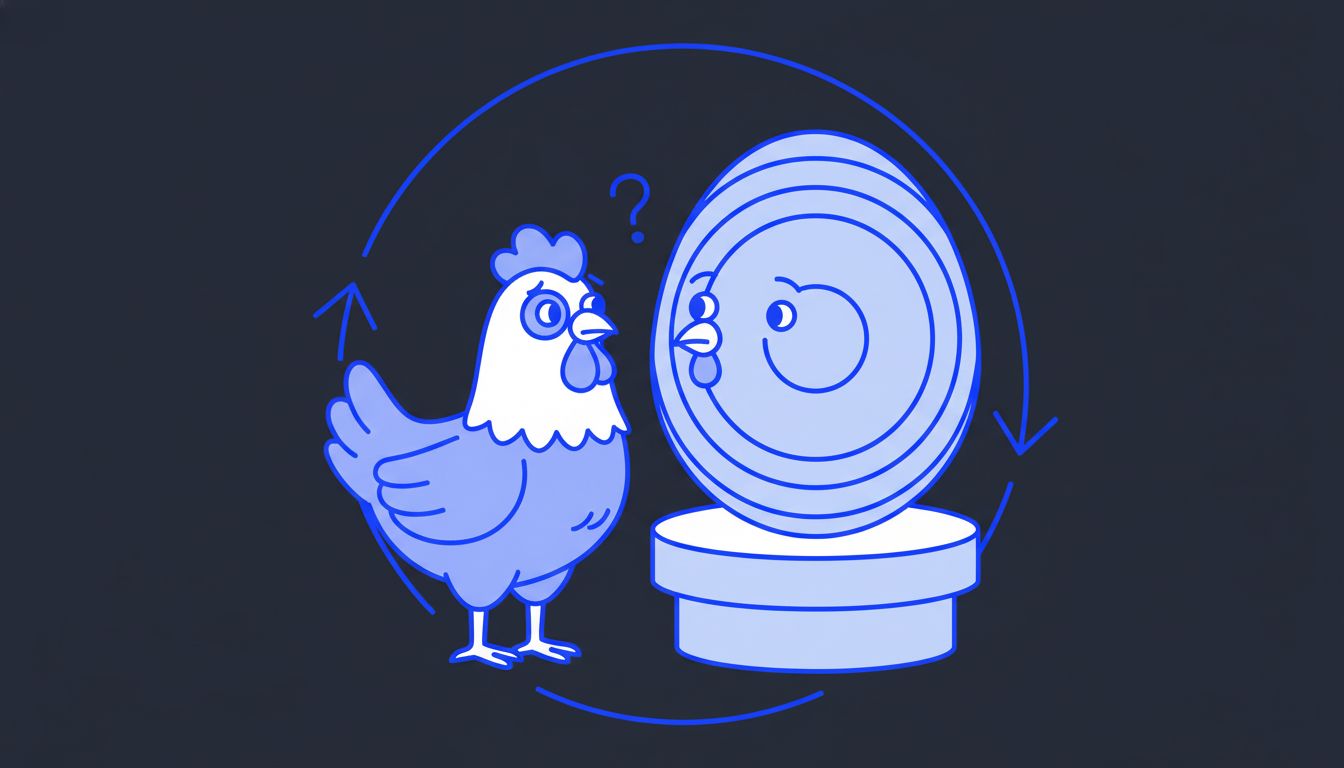
Trying to find your Ideal Customer Profile without any customers feels impossible.
You’re told to analyze your best customers, but you don’t have any. It’s the ultimate chicken-or-egg problem, and most advice online is useless fluff.
I get it. The good news is you don’t need sales data to get started.
This guide will give you a tactical, no-nonsense framework to build and validate your ICP from zero. We’ll cover how to form a hypothesis, test it with real-world signals, and find where these people actually spend their time.
The Real Cost of Guessing
Let’s be direct: flying blind is a death sentence for a startup.
The data doesn’t lie. Research analyzing over 100 startup failures reveals that 42% of startups fail for one simple reason: they build something nobody needs. No market need is the number one killer of startups.
They waste months of runway and thousands of dollars targeting everyone, which means they’re actually targeting no one. Without a clear focus on who actually needs your solution, you’ll burn through resources chasing the wrong customers.
A defined ICP isn’t a ‘nice-to-have’ marketing exercise. It’s your core business strategy. Recent research shows that 4 in 5 companies still don’t have a clearly defined ICP, yet companies with clear ICPs see a 68% higher win rate in sales. It is the filter for every decision you make, from product features to marketing copy.
How to find Ideal Customer Profile (ICP)
Forget the complex canvases and abstract theories. Finding your initial ICP is about making an educated guess and then relentlessly trying to prove it wrong. It’s about action, not perfect planning.
Here’s the step-by-step process:
Step 1: Formulate Your Initial Hypothesis
You have to start somewhere. An initial hypothesis isn’t a commitment; it’s a starting line. We call this an Early Customer Profile (ECP).
Base it on your intuition and observations. Who do you believe has the problem you solve most acutely?
Be specific. Don’t just say “small businesses.”
Instead, try something like the NexaCRM example: “Tech startups, 1-5 years old, with 20-50 employees, who are struggling with overpriced, complex CRM solutions.”
Write down these attributes:
-
Demographics/Firmographics: Industry, company size, revenue, location.
-
Role: Job title of the person who feels the pain and the person who signs the check.
-
Pain Points: What specific, costly problem are they dealing with right now? What have they tried using to fix it?
-
Goals: What does success look like for them if this problem disappears?
Step 2: Conduct Customer Discovery Interviews
Now, you have to get out of your own head and talk to people.
Your goal is not to sell. Your goal is to learn.
Find 15-20 people who fit your ECP on LinkedIn or in relevant communities. Reach out with a simple, honest message: “I’m a founder researching problems in the [their industry] space. I’m not selling anything, but I’m building a solution for [job title] and would love to get your expert opinion for 15 minutes.”
During these calls, ask open-ended questions:
-
Tell me about how you currently handle [problem area].
-
What’s the hardest part about that process?
-
What solutions have you tried in the past? What did you like or dislike?
-
If you could wave a magic wand and fix one thing about this, what would it be?
Listen for urgency. Are they describing a minor annoyance or a hair-on-fire problem? Most experts recommend conducting 15-30 customer discovery interviews to identify recurring patterns in pain points, language, and urgency.
Step 3: Run Lean Validation Tests
Interviews tell you what people say. Validation tests tell you what people do.
This is where you separate interest from intent.
Here’s the plan:
Create a simple landing page with a powerful value proposition aimed directly at your hypothesized ICP. Use a clear call-to-action like “Join the Private Beta” or “Get Early Access.”
Then, drive a small amount of targeted traffic. Spend $100 on LinkedIn or Reddit ads targeting the exact job titles and industries from your hypothesis.
This is where you can move faster than the competition. You need to simulate how your message and creative assets will land with different personas before you spend significant ad budget. For example, tools like holito let you upload creatives, find personas, and simulate messaging to see what resonates without wasting weeks on live A/B tests. For more on finding and validating customer segments, see our guide on how to identify new customer segments effectively.
Step 4: Find Where They Live Online
Once you have a validated signal, you need to find where these people congregate online so you can engage with them at scale.
Stop thinking about platforms and start thinking about behaviors.
Where do they go to ask for help? Where do they complain about their jobs? That’s your goldmine.
Modern B2B buying research shows that buyers are increasingly preferring digital, self-service experiences, with 75% of B2B buyers wanting a rep-free sales experience for familiar products. They’re doing their research in communities, on vendor websites, through peer reviews, and in industry forums long before they ever talk to sales.
Start by “lurking.” Go to Reddit, niche Slack communities, Facebook Groups, or industry forums. Use the search function to find keywords related to their pain points. Don’t post. Just read.
Pay attention to the language they use. Note the common frustrations and the alternative solutions they suggest to each other. This is the raw material for all your future marketing copy.

Iteration is the Name of the Game
Finding your ICP is not a one-time event. It’s a continuous process of refinement.
Your first ICP gets you your first 10 customers. Those 10 customers will teach you who your real ICP is for your next 100.
The market changes. Your product evolves. Your ICP must evolve with it.
Analysis of over 6 million buyer interactions reveals that buyers engage with demos and product content multiple times before making decisions, with 9+ demo views correlating to 8-10x higher close rates. This means your ICP definition needs to account for how different stakeholders in the buying process interact with your solution.
Stay curious. Keep talking to customers. And never assume you have it all figured out. The moment you stop iterating is the moment your competition starts winning. For deeper insights into understanding your audience’s motivations, explore our guide on AI psychographic mapping.
The Bottom Line
Rapid Fire FAQ
How is an ICP different from a buyer persona?
A buyer persona is a semi-fictional character sketch of an individual user. An ICP is a description of the perfect company to sell to, focusing on firmographics like industry, size, and budget.
What if my initial ICP hypothesis is completely wrong?
That’s a success, not a failure. You’ve successfully invalidated a bad idea, saving you months of wasted effort. Formulate a new hypothesis based on what you learned and start the process again.
How many customer interviews are enough?
Aim for 15-20 interviews to start. You’re not looking for statistical significance; you’re looking for recurring patterns in language, pain points, and urgency. When you can predict what the next person is going to say, you’ve done enough for now.
Can I have more than one ICP?
No. At the early stage, you must focus on one specific, narrow ICP. Trying to serve multiple markets at once is a recipe for building a mediocre product that delights no one.