Every SaaS founder learns the playbook.
You create three pricing tiers: Basic, Pro, and Enterprise.
You cripple the Basic plan just enough to be annoying.
You price the Enterprise plan for a Fortune 500 company.
And you slap a ‘Most Popular’ banner on the middle tier to guide the herd.
This is ‘Goldilocks pricing’.
And it is a lazy, unimaginative, and fundamentally broken model. For more on understanding your customers before pricing, see our guide on defining your ICP.
This framework is held up as the gold standard, but it’s a relic. It’s built on a manipulative psychological trick designed to push prospects into a predetermined ‘sweet spot’ that serves your revenue projections, not their needs.
Worse, it actively discriminates against a massive, underserved market: the individual user.
The freelancer.
The bootstrapper.
The ‘little guy’.
I’m not just here to criticize. Actions over words.
I’m here to tell you that clinging to this outdated model is costing you customers, killing your product’s potential, and leaving the door wide open for a disruptor to eat your lunch.
It’s time to burn the old playbook.
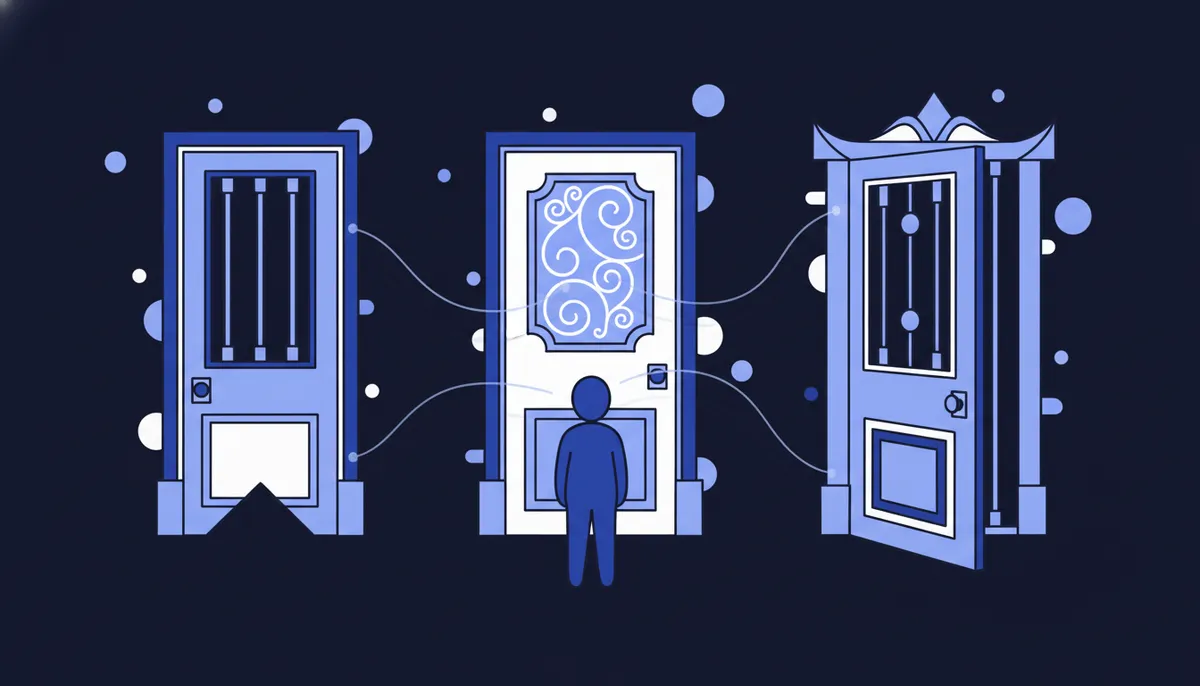
The Fundamental Flaw of ‘Goldilocks’ Pricing
The entire premise of the three-tier system is flawed.
It’s designed from the company’s perspective, not the customer’s. It’s built for your revenue model, not their reality.
As one Hacker News commenter put it, these models are often ‘grossly simplistic’ because they fail at ‘aligning pricing to customer value’.
They fail to align price with the actual ROI the user gets.
This isn’t just a philosophical problem. It’s a balance sheet problem.
The Data Doesn’t Lie: Tiered Models Are a Leaky Bucket
Let’s cut the theory and look at the facts. The market is already moving on from tiered pricing because the numbers prove it’s inferior.
The data is clear:
According to a landmark 2022 report from OpenView, nearly 60% of SaaS companies are now using or testing usage-based pricing (UBP).
This isn’t a trend. It’s a fundamental shift in the market.
Why the pivot?
Because companies with usage-based models demonstrate superior Net Revenue Retention (NRR). OpenView found the median NRR for UBP companies was 120%, significantly outperforming the 111% median for companies without it.
That difference is your future growth, bled away by a bad model.
Public markets reward this alignment. The same report found that public UBP companies trade at a 50% revenue multiple premium compared to their subscription-based peers.
The market values execution and real value alignment, not psychological tricks.
Your three-tier model is leaving money on the table and actively repelling your best future customers.
Here’s exactly how it breaks:
It Punishes Ambition
The ‘little guy’ isn’t a freeloader looking for a handout.
This is a student building a side project. A freelancer scaling their business. A tiny startup with a massive vision.
These users are often your most innovative and demanding customers. They push your product to its limits. They expose its weaknesses.
They are a free R&D department, giving you the insights you need to build a product that can win.
But the Goldilocks model forces them into an impossible dilemma.
The basic plan is useless by design. The ‘pro’ plan is packed with team features they don’t need, at a price they can’t possibly afford.
You’re effectively telling your most passionate, forward-thinking users that they are not worth the hassle. You’re killing your future pipeline before it even has a chance to grow.
By ignoring the ‘little guy’, you are choking off a primary source of innovation and feedback. The features an individual power user needs today are often the same features a large team will demand tomorrow. Catering only to established teams makes your product stagnant and irrelevant.
It Creates a Value Gap
There is a massive chasm between a single user and a 10-person team.
Yet, most pricing models pretend they are the same buyer. This forces individuals to pay for seats they don’t use and collaboration tools they don’t need.
This isn’t just unfair; it’s bad business. It’s an insult to your user’s intelligence and a direct cause of churn.
When a customer perceives a gap between the price they pay and the value they receive, they leave. It’s that simple. You created unnecessary friction and gave them every reason to search for a more logical alternative.
The discussion on Hacker News about ‘SaaS pricing. Why not charge the little guy?’ proves this frustration is real, widespread, and growing.
Someone will solve it. It might as well be you.
A New Playbook for Inclusive Pricing
So what’s the alternative?
Stop thinking in boxes.
The future of SaaS pricing isn’t about finding three perfect tiers to shove your customers into.
It’s about flexibility, scalability, and true value alignment. It’s about building a model that grows with your customers, not in spite of them.
Here are the models that will win the next decade:
The Usage-Based Revolution
This is the purest form of value-based pricing.
You pay for what you use. End of story.
Think about companies like AWS, Twilio, or Snowflake. Their pricing scales perfectly from the solo developer tinkering on a weekend project to a massive enterprise processing petabytes of data.
There are no artificial feature gates. There are no penalties for being small.
If you provide immense value, your revenue grows. If a user is just starting out, your platform is accessible.
This is the model that produces best-in-class Net Revenue Retention. You win when your customers win. It is the ultimate alignment of incentives.
No excuses.
To implement usage-based pricing, you must identify your core value metric. Is it API calls? Gigabytes of storage? Number of contacts? This metric must be the single thing that most directly correlates with the value a customer receives from your product. Get this wrong, and the whole model fails. This requires discipline, not guesswork.
The ‘Per-Seat, Done Right’ Model
The per-seat model isn’t inherently evil, but its common implementation is broken.
A better approach is a low-cost, or even free, ‘base’ plan for the account, with a true per-seat cost that scales fairly and logically.
Look at Figma.
They offered a powerful free tier for individuals. This allowed an entire generation of designers to adopt their tool without a permission slip from accounting.
Their paid plans scale logically as teams grow.
They didn’t block innovation; they fueled it. They captured the individuals, who then brought the tool inside their larger organizations.
They played the long game and won. Now they dominate the market.
The Modular, Feature-Based Approach
Instead of bundling features into rigid, take-it-or-leave-it tiers, let users build their own plan.
Offer a core product at an accessible price point.
Then, sell access to specific, high-value features as add-ons.
A freelancer might need advanced analytics but not team collaboration tools. A small agency might need a client portal but not enterprise-grade SSO.
This model allows every user to create their perfect plan without paying for shelfware. It puts the power in their hands, where it belongs.
Some argue that small customers are too much work. That ‘the customer that brings in the least money also makes up for most of the work’. This is a symptom of a bad product and a bad pricing model, not a bad customer. It’s an excuse for mediocrity. If your product is intuitive and your pricing is fair, you slash the support load and build an army of loyal fans who will grow with you.
Stop thinking about how to trick your customers into the middle plan.
Start thinking about how to build a pricing model that feels like a partnership.
The ‘little guy’ isn’t a market to be ignored.
It’s the future of your business.
Action Plan
- Audit Your Tiers: Are your pricing tiers based on your internal needs or your customers’ actual growth paths? Be honest with yourself. Stop lying.
- Identify Your Value Metric: Shift the conversation from features to usage. What one metric best represents the tangible value your customers receive? Execute on this.
- Embrace the Individual: Create a viable, powerful entry point for the solo user. This is your future pipeline of enterprise accounts and your best source of raw innovation.
- Offer Real Flexibility: Explore usage-based, modular, or hybrid models that allow pricing to scale smoothly with your customers’ success. Stop forcing them into boxes. The data proves this is the way to win.
Get a copy of our state of ads industry report