Let’s be honest. Tracking ad performance feels like a total mess right now.
You’re tired of opaque tools, GA4’s ‘enshittification’, and so-called experts selling you on solutions that feel like ‘astrology for marketers’.
I promise to cut through the noise. This is the definitive, no-nonsense guide to the tools that actually work, the ones to avoid, and how to build a stack that delivers real ROI.
Here’s what we’ll cover:
The foundational stack you can’t ignore, specialized tools for e-commerce and B2B, and the critical shift towards predictive analytics to stop wasting money.

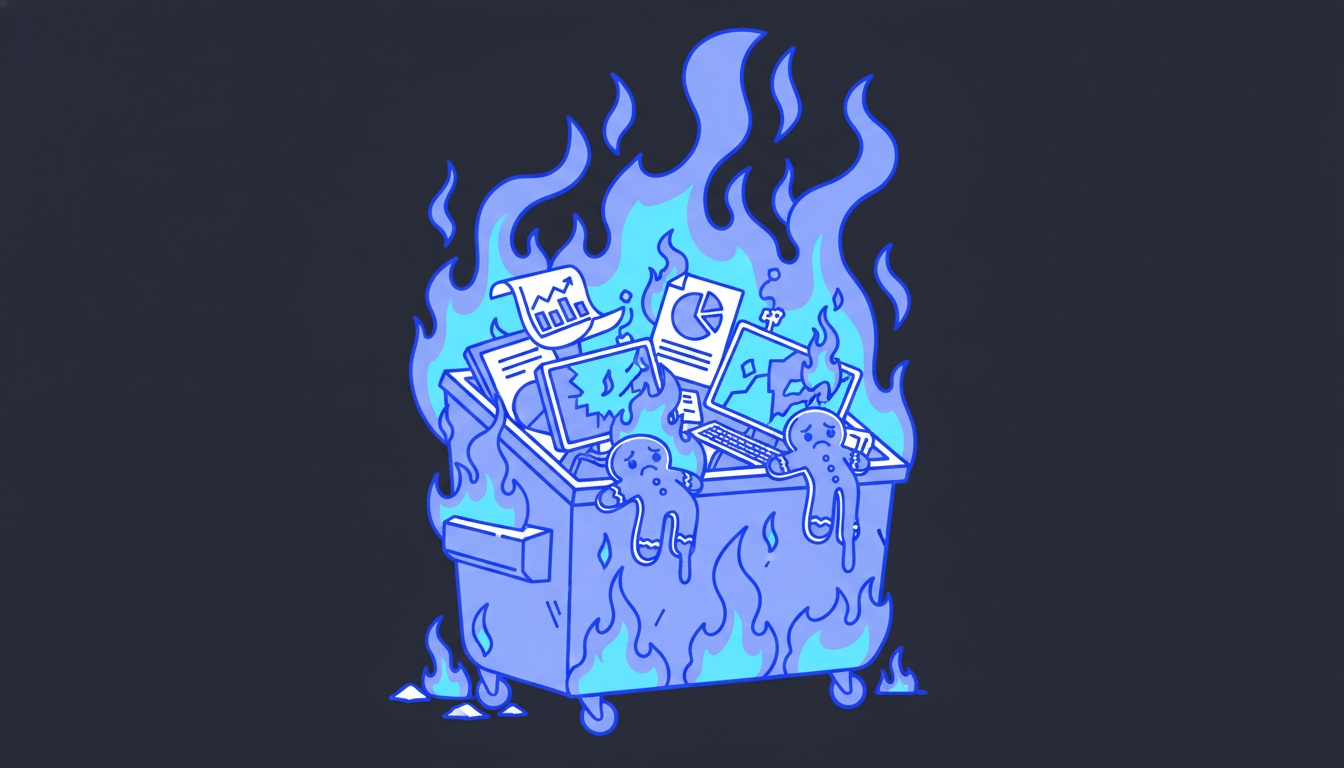
Why Your Current Tracking is a Dumpster Fire
The post-iOS 14 world, coupled with the slow death of third-party cookies, broke traditional ad tracking. Pixel data is unreliable. Platforms are desperate to claim attribution, leaving you to sort out the conflicting reports.
Then there’s Google Analytics 4. It was rushed, it’s unintuitive, and it feels more engineered for app developers than for marketers trying to answer simple business questions. Social media is filled with marketers calling it ‘steaming hot garbage’ for a reason.
The bottom line is this: relying on platform-reported ROAS alone is a recipe for disaster. You need a robust, independent system to get to the truth.
The Core Tool Stack for 2025
No single tool is a magic bullet. Your business model dictates your stack. But for most, the foundation looks something like this.
Foundational Analytics: The Non-Negotiables
Google Analytics 4 (GA4): Look, I know it’s a pain. But with 81% of businesses using Google Analytics, it remains a necessary evil. It’s the central hub for website behavior and integrates with everything. Set it up correctly with server-side tagging for the best possible data fidelity.
A Solid CRM (like HubSpot): Your ad data is useless if it doesn’t connect to customer data. A CRM like HubSpot helps you track the entire journey from click to close, giving you true insight into Customer Lifetime Value (CLV), not just the initial conversion.
E-commerce Powerhouses: For High-Volume Sales
For e-commerce, you need speed and clarity. Tools like Triple Whale and Polar Analytics are built for this. They centralize data from Shopify, Meta, Google, and Klaviyo, offering different attribution models to give you a clearer picture of what’s driving sales.
They excel at first-party, server-side tracking, which is crucial for improving Meta CAPI match rates and getting more accurate ROAS in a privacy-first world.
B2B & Long-Cycle Attribution: Connecting Dots to Dollars
B2B sales cycles are long and complex, often involving an average of 36 touchpoints. A single ad click rarely tells the whole story.
Tools like Dreamdata and Ruler Analytics are built for this reality. They connect ad platform data with your CRM to map out the entire customer journey, showing you how different channels contribute to generating a qualified lead and, eventually, revenue.
The DIY Route vs. ‘Black Box’ Apps
There’s a constant debate: use an all-in-one app or build your own tracking stack? Advanced marketers are increasingly moving away from ‘black box’ solutions like wetracked.io or Hyros, which receive very mixed user feedback.
Here’s the deal: Building a custom stack with Google Tag Manager, a dataLayer, and server-side CAPI via a service like Stape.io gives you full control and superior data quality. It’s more work upfront but is far more robust and cost-effective in the long run.
Be extremely skeptical of tools that make outrageous claims or can’t explain their attribution methodology. If their website ‘screams we are making this shit up,’ it probably is.
The Future: Pre-Launch Prediction & Simulation
Tracking is reactive. It tells you what already happened. The next frontier is predictive, telling you what will happen before you spend a dime.
This is where creative optimization comes in. Campaigns that refresh creatives every 4-6 weeks can see engagement jump by up to 38%. But that process is slow and expensive.
New AI platforms are changing the game. For example, holito lets you simulate your customers. You can upload your ad creatives and messaging, then test them against your target audience personas virtually. This reduces ad waste and cuts optimization time down from weeks to minutes.

Thinking about tools like holito shifts the focus from just tracking ROI to actively improving it before you even go live. It’s about making the ‘cost’ part of the ROAS equation smaller from the start.
Once you have the right tools in place, you need to optimize your campaigns strategically. For Google Ads specifically, see our guides on optimizing ad spend and taming PMax and our complete Google Ads optimization checklist for 2025 to maximize your ROI.
2024 is a pivotal year for ad tech. The winners will be those who embrace first-party data, transparent attribution, and predictive intelligence.
Rapid Fire FAQ
Are third-party conversion tracking tools worth it?
For many, yes, but only if they provide transparent, multi-touch attribution that native platforms lack. Avoid ‘black box’ tools and consider if a custom server-side setup offers better long-term value and control.
What’s a real, user-friendly alternative to GA4?
While GA4 is foundational, tools like Mixpanel for SaaS or Polar Analytics for e-commerce offer more intuitive interfaces for specific use cases. However, they supplement GA4, they don’t fully replace its core function.
Why is my pixel tracking so inaccurate on Meta?
This is a common issue post-iOS 14 due to privacy restrictions. The best solution is implementing the Conversions API (CAPI) with server-side tagging to create a more reliable data connection between your server and Meta’s.
How can tools claim attribution without UTM parameters?
They often use a combination of first-party cookies, device fingerprinting, and probabilistic modeling to connect a user’s journey across devices and sessions. Always question the transparency and accuracy of these methods.
The Bottom Line
-
No Magic Tool: The best ‘tool’ is a well-integrated stack tailored to your business model (e-commerce, B2B, SaaS).
-
Own Your Data: Prioritize a robust first-party data strategy with server-side CAPI. This is your only path forward in a cookieless world.
-
Shift from Reactive to Predictive: Stop focusing only on what happened. Use simulation and predictive tools to optimize campaigns before you spend, dramatically improving your baseline ROI.