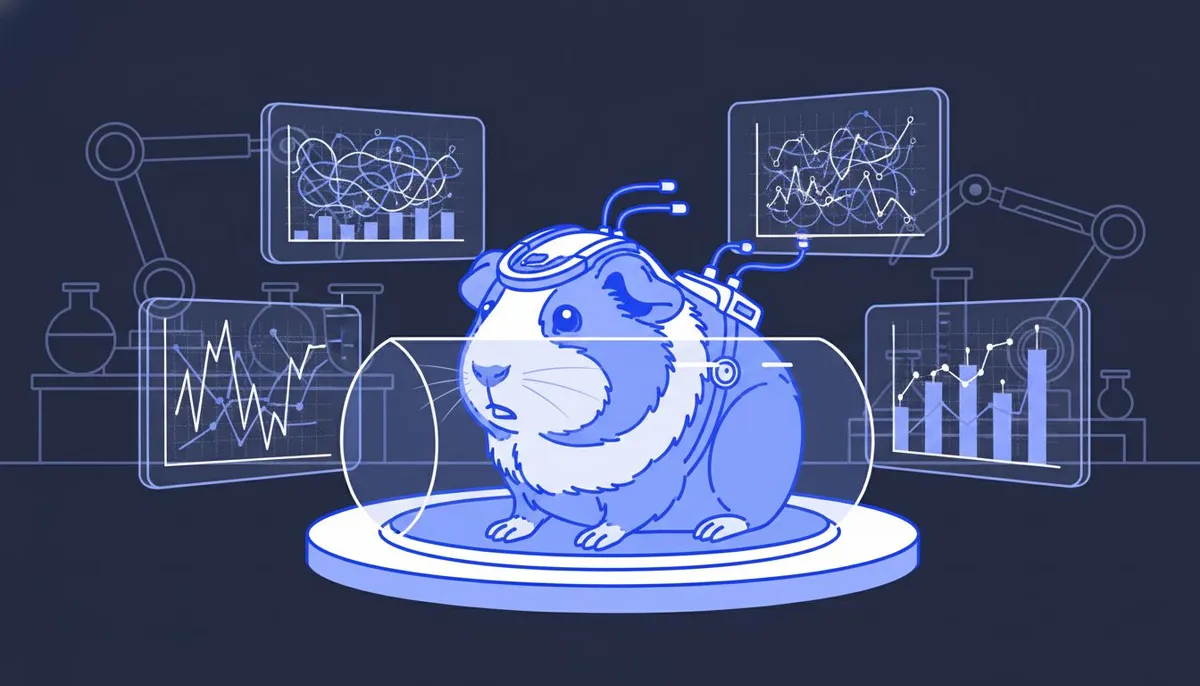
You feel like a guinea pig.
You are right.
If your ROAS collapsed overnight in October, you are not alone.
The Meta Andromeda Update October 2025 impact on performance marketers has been a bloodbath for the unprepared.
Meta pitched this as the next evolution of their AI.
But for those of us in the trenches, it feels different.
It feels like we are funding their R&D department with our own wasted ad spend.
We are seeing accounts where a single creative hogs 95% of the budget.
We are seeing targeting constraints treated as “suggestions.”
We are seeing stable campaigns tank within days.
Here is the deal:
Complaining about the algorithm won’t bring your CPA down.
The ecosystem has shifted.
The old playbook of micro-targeting and interest stacking is dead.
It is not coming back.
I am going to walk you through exactly what changed with the Andromeda update.
I will explain why your budget allocation is broken.
And I will show you the manual overrides you need to regain control.
The Andromeda Reality Check: Why Your Ads Broke
Let’s cut through the corporate PR speak.
Meta’s Andromeda update is a fundamental overhaul of the delivery infrastructure.
It moves the platform to an AI-driven retrieval engine. (Note: In November 2025, Meta released GEM, which replaced Andromeda. If you’re reading this after November 2025, see our GEM update guide for the latest strategies.)
According to Meta’s official engineering blog, this new retrieval system represents a 10,000x increase in model capacity and has shown a 22% ROAS increase in testing.
Previously, you gave Meta a target.
The system looked for people in that bucket.
Now, the Meta Ads AI Engine looks at your creative first.
It analyzes the pixels.
It scans the video frames.
It reads the copy.
It uses those signals to find users.
This sounds advanced.
In theory, it is.
Meta claims this retrieval system improves ad recall by 6% and quality by 8%.
But in practice, it has created a volatile environment.
The machine often ignores your instructions.
Sam Piliero is a veteran ad buyer.
He noted that this is the biggest infrastructure change since iOS 14.5.
The result is chaos.
Some accounts saw CPMs drop by 20% overnight.
Others saw customer acquisition completely tank.
Real-world case studies from Smart Marketer show the Clean-eez brand achieving CPMs down 20% and CPAs down 35% after consolidating their campaign structure, proving the strategy works when executed correctly.
If you are a small business or a “gym rat brand” with a $50 daily budget, you are hurting.
The system now demands data density.
It craves volume.
If you starve it, it feeds you junk traffic.
The “95% Spend” Glitch Explained
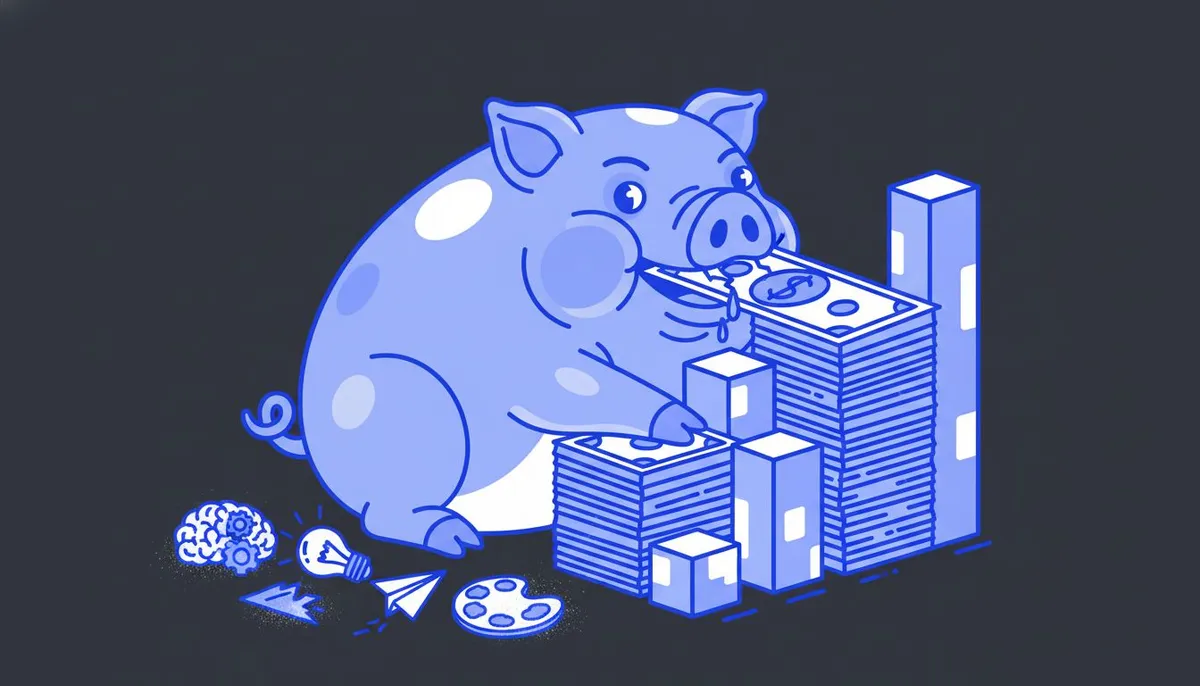
The loudest complaint right now is budget allocation.
You launch a campaign with five diverse creatives.
You expect Meta to test them all.
Instead, the algorithm latches onto one ad.
It spends 95% of your budget on that single asset.
The other four winning concepts get zero impression share.
They collect dust.
This is not a bug.
It is a feature of the AI Ad Retrieval System behaving efficiently.
It is lazy.
The AI finds the path of least resistance.
Once it identifies a creative that gets a cheap click, it dumps the entire budget there.
It does not care about your desire for Creative Diversification.
This creates a false signal.
As detailed in MTM Agency’s October 2025 analysis, the global rollout completion means creative diversity now defines ad performance more than any other factor.
You think you have a “winner.”
In reality, you have a budget hog that is burning out your audience.
The Phantom Targeting Problem
We are also seeing widespread reports of targeting overrides.
You set an age limit.
You exclude a demographic.
The Meta Andromeda Update October 2025 impact on performance marketers means the algorithm frequently ignores these hard caps.
It views your targeting settings as “optional signals.”
If the AI thinks it can get a conversion outside your bounds, it goes there.
This is why you see spend bleeding into irrelevant age groups.
ClickGuard’s comprehensive breakdown covers the creative similarity penalties and data signal requirements that make this targeting override behavior so problematic.
Targeting is Dead Creative is King (For Real This Time)
We have said this for years.
But now, it is the only law that matters.
Under Andromeda, your creative is your targeting.
If your ads all look the same, the algorithm literally runs out of ideas.
It cannot distinguish between your ad sets if the visual signals are identical.
This forces a Campaign Structure Simplification.
You cannot run 9 different campaigns with 9 different interest stacks anymore.
You are just competing against yourself.
The 1-1-Many Strategy
To survive this update, you must pivot to a “1-1-Many” structure:
-
One Campaign: Use Campaign Budget Optimization (CBO). Give the AI a larger pool of money to work with.
-
One Ad Set: Broad targeting. Let the machine find the people.
-
Many Creatives: This is where the work happens. You need radically different angles.
1ClickReport’s 2025 implementation guide recommends testing 6 distinct creative angles and has documented a 17% increase in conversions after restructuring campaigns this way.
You need static images.
You need UGC videos.
You need carousels.
The lifespan of a creative has plummeted.
Previously, a good ad could run for weeks.
Now, performance often degrades within 3-5 days.
This is “algo fatigue.”
The system burns through the audience fast.
This requires a constant churn of new assets.
You cannot rely on intuition anymore.
You need data-backed creative concepts that hit different emotional triggers.
For example, you can test your creative concepts before you launch to validate messaging angles instantly.
You can upload your creative concepts and simulate how different personas react to them.
This allows you to validate your messaging angles instantly.
You stop waiting for Meta to waste $500 finding out your hook is weak.
This is where predicting the winner before spending budget saves time and money.
Manual Overrides: Stabilizing the Ship
When the autopilot is trying to crash the plane, you grab the stick.
If you are suffering from the Meta Andromeda Update October 2025 impact on performance marketers, stop trusting Advantage+ Automation.
Do not follow it blindly.
We need to introduce friction.
We need to force the algorithm to respect our math.
1. The Cost Cap Defense
The most effective weapon right now is the Cost Cap (or Bid Cap).
By setting a hard cost control, you prevent the algorithm from spending on bad inventory.
If Meta cannot get you a conversion at your specified price, it will not spend.
This solves the “forced spend” issue.
It stops the system from blowing your budget on cheap clicks that don’t convert.
But there is a catch:
Cost caps can kill delivery.
If you set the cap too low, your ads won’t run.
You need to find the sweet spot.
Start slightly above your target CPA.
Walk it down as you get data.
2. Forcing Creative Rotation
The algorithm refuses to rotate ads.
You must do it manually.
Do not put all your new creatives in the same ad set as your proven winner.
The winner will cannibalize the budget.
Create a separate “Sandboxing” campaign or ad set for testing.
Force spend into that specific environment.
Once a creative proves itself with real metrics, promote it.
Move it to the main scaling campaign.

Navigating Advantage+ Automation Without Losing Your Shirt
Meta pushes Advantage+ Automation as the solution.
They want you to toggle every switch to “On.”
Do not do it.
The “Advantage+ Creative Enhancements” are often garbage.
The AI will crop your videos weirdly.
It will add tacky music.
It will overlay text that makes no sense.
This creates “bad signals.”
Users scroll past these ugly, AI-mangled ads.
Your CTR drops.
Your CPM rises.
Use the automation for delivery (finding the user).
But keep tight control over the creative.
Turn off the “Standard Enhancements” unless you have tested them.
Foxwell Digital’s practical guide provides balanced recommendations on flex ads, measurement challenges, and the trade-offs between automation and control for different advertiser types.
The Sequence Learning Opportunity
One positive from the Media Buying Strategy 2025 shift is Sequence Learning for Ads.
The AI is getting better at understanding the user journey.
It knows that a user who watched Video A might be ready for Image B.
But this only works if you feed it a variety of formats.
If you only feed it static images, you break the sequence.
For deeper insights on optimizing your ad performance and avoiding wasted spend, see our guides on beating the ROAS mirage and optimizing ad spend in 2025.
Rapid Fire FAQ
Here are the answers to the questions burning up the forums right now.
Q: Why is Meta spending 95% of my budget on one ad?
A: The AI Ad Retrieval System follows the path of least resistance. It locks onto the first creative that gets traction. It ignores the rest to conserve computing power.
Q: Is detailed targeting actually dead?
A: Yes. The Meta Andromeda Update October 2025 impact on performance marketers treats targeting inputs as optional suggestions. The creative content now dictates who sees the ad.
Q: Can I still run ads with a $30 daily budget?
A: It is very risky. The new algorithm requires high “data velocity” to optimize. Low budgets often trap you in low-quality traffic tiers.
Q: Why are my leads low quality suddenly?
A: The algorithm is optimizing for the event (the form fill). It is not optimizing for the value. It finds the easiest people to fill the form to meet your cost goals.
The Bottom Line
The Meta Andromeda Update October 2025 impact on performance marketers is a wake-up call. The days of lazy media buying are over. Here is your action plan:
-
Consolidate: Move to a 1-1-Many campaign structure. Stop fragmenting your data.
-
Override: Use Cost Caps to stop the algorithm from wasting budget on bad inventory.
-
Diversify: Build a relentless creative pipeline. You need new angles every week, not every month.
-
Simulate: You cannot afford to launch bad ads. Stop guessing. Use tools to validate creative concepts before you spend a dime.
The algorithm is broken, but your business doesn’t have to be. Adapt or die.
Note: In November 2025, Meta released GEM (Generative Ads Model), which replaced Andromeda’s retrieval system with a predictive model. If you’re experiencing volatility or “dying ads” after November, see our guide on fixing ads volatility and boosting ROI with the GEM update.